
Mountain House City Directory Holdings
Mountain House does not have a long, self-contained run of printed city directories. Its present master-planned community was approved in the 1990s and built mainly after 2000, so the best historical shelf is countywide rather than a fictional volume devoted to the new city. San Joaquin County directories from 1852 through 1980 can still place people and businesses in the wider county, although rural coverage changes by publisher and year. Assessment books, plat books, Great Registers, census schedules, and deed records fill the gaps where a directory did not canvass a rural area.
| Collection | Years | Where Held | Access |
|---|---|---|---|
| San Joaquin city and county directories | 1852-1980 | Historical Museum; Kennedy Reference Library | Appointment only; rural coverage varies |
| County official archives | 1850-1990 | San Joaquin County Historical Museum | Appointment-only archival research |
| Assessment and plat books | County-era through the twentieth century | Museum, Recorder, and Assessor | In person or office map access |
| Maps and aerial photographs | 1860-1990 | Historical Museum | Appointment only; landscape history |
| Obituary card index | 1850-1991 | County library and FamilySearch images | Index and newspaper follow-up |
| Federal census schedules | 1790-1950 public release | NARA, library databases, and catalogs | Use historic township geography |
Collection names do not guarantee a Mountain House entry. A county volume may favor Stockton, Lodi, or established farm routes, while a newer subdivision did not yet exist when it was compiled. Record the volume, edition, page, and locality before treating a name as evidence. A missing year may reflect a publication gap, a missed canvass, rural exclusion, or a change in the publisher's coverage instead of a move.
Why Mountain House Directories Begin Countywide
A modern Mountain House city directory search has to start with time and jurisdiction. Before city incorporation, the Mountain House Community Services District and San Joaquin County produced most local administrative and planning records. After July 1, 2024, City Council, city clerk, business-license, and city planning material increasingly belongs to the City of Mountain House. A printed directory from the older county run cannot be read as a current municipal roster, and a city-era planning file does not turn into a historical directory entry.
The distinction helps with names tied to land. A predevelopment surname may appear in an assessment book, rural directory, deed, or Great Register even when no street name matches a present address. A post-2000 household may be easier to connect through a subdivision map, permit, or parcel record than through a city directory. Keep the record date beside the custodian, then compare the result with the local collection that could actually have included that place.
Mountain House City Directory Archive Shelf
The San Joaquin County Historical Museum archives give the countywide city directory search its strongest local anchor. The archive is in the Erickson Building at Micke Grove Regional Park, 11793 N. Micke Grove Road, Lodi. It holds official county material from 1850 through 1990, including minute books, assessment and plat books, infrastructure and community-planning surveys, vital statistics, marriage records, and Great Registers. Staff list public hours as Thursday through Sunday, 10 a.m. to 4 p.m., but the page also carries a stale closure footer, so call 209-331-2055 or email info@sanjoaquinhistory.org before traveling.
The Museum's archive page is the source for the following collection image and appointment guidance.
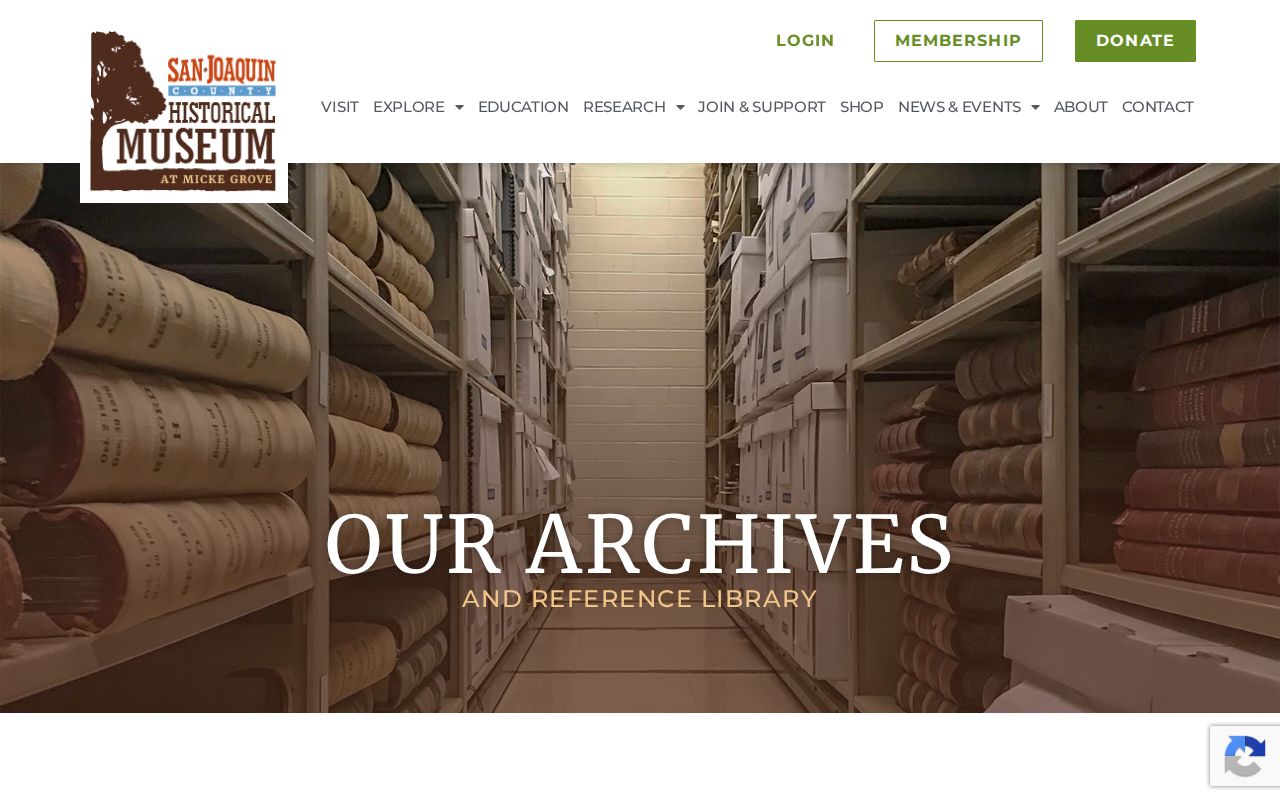
Archival access is appointment only, with availability set by the archivist. Ask for the directory year, publisher, locality, and any reverse or street section before the visit. A request framed around a surname plus a rural road, tract, or former landowner is more useful than a broad request for every person connected to Mountain House.
Mountain House City Directory Library Shelf
The Cesar Chavez Central Library adds a practical genealogy route to the Mountain House city directory search. Its noncirculating reference collection contains more than 1,500 genealogy books, 200 family histories, and 125 society periodicals. Ancestry Library Edition is available in the library, while HeritageHub supplies obituary research. The library also preserves the digitized California, San Joaquin County Public Library Obituary Index, 1850-1991, where an index-card image can point to a newspaper notice without pretending to be a full biography.
The Chavez Library genealogy collection is the source for this library reference image and its database access details.
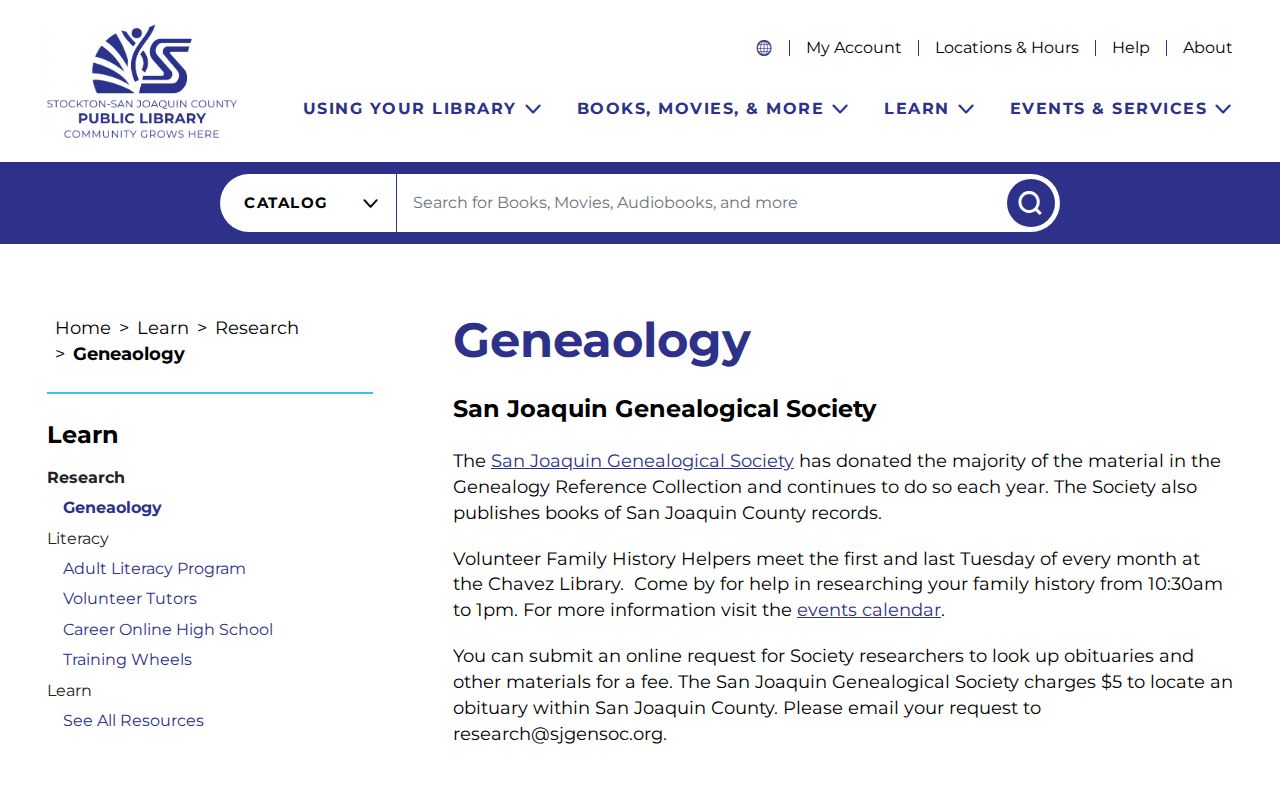
Family History Helpers meet on the first and last Tuesdays from 10:30 a.m. to 1 p.m. For a targeted death notice, the San Joaquin Genealogical Society offers a $5 obituary lookup through research@sjgensoc.org. The library's vital statistics guide gives another path for local indexes, obituary cards, and cemetery books. These sources are strongest for family history, reunions, and identity clues, not for assuming that an old address remains current.
Reading Mountain House Directory Entries
A city directory entry is a compact record, not a narrative. Start with the exact surname, given name, and initial. Then inspect the address, spouse notation, occupation or title, firm or employer when supplied, and any widow or owner/renter mark. A street or reverse section may place the same name in address order. Not every volume carries every field, and rural routes may be compressed into a locality label instead of a numbered street.
| Name | Surname, given name, and initial; a spouse may appear in parentheses. |
|---|---|
| Occupation or title | Role, firm, or employer when the publisher recorded it. |
| Address | House number and street, rural route, or business location. |
| Household marks | Widow notation and an owner/renter marker may vary by volume. |
| Street section | Reverse entries may list a street, number, occupant, and business. |
Preserve the spelling and initials as printed before normalizing anything. Compare an entry with the next available edition. A spouse, occupation, address, or adjacent business can distinguish two people with the same surname. An abbreviation key is part of the evidence, because a mark that means residence in one run may have a different use in another.
Mountain House City Directory Terms
Three terms keep a historical city directory search from drifting into guesswork. Each describes a different way a volume organizes names, so identify the section before reading a line as proof of residence.
- Criss-cross directory
- An address-ordered or street-ordered section that can point from a place to a listed occupant or business.
- Householder index
- An alphabetical entry point for the person treated as the household head; other household members may be absent.
- Abbreviation key
- The volume's own list of short forms, such as h, r, emp, or wid, which should be checked before interpretation.
These terms do not promise complete coverage. A directory may omit rural households, list only one name at an address, or change its symbols after a publisher change. Photograph or transcribe the key with the page so the entry can be read later in its original context.
Trace Mountain House City Directories
Tracing a household across city directory years works best as a sequence of small checks. Begin with a known name or place, then use the county collection to bridge the decades before the modern Mountain House streets existed. A single hit is a lead. Repeated address, spouse, occupation, and family clues make the trail stronger.
- Find the first plausible surname and given-name entry, and record the edition, page, locality, and all initials.
- Compare adjacent available years, noting a new address, spouse, widow notation, firm, or changed abbreviation.
- Check a criss-cross or street section when one exists, then compare the nearby entries without assuming every neighbor is related.
- Pair the directory clue with a census year and historic township or enumeration geography rather than searching only for the modern city name.
- Test the ending with an obituary index, marriage record, probate file, or cemetery compilation, and cite the original source behind the index.
When a directory clue needs a present-day name or parcel check, the Resident Lookup page supplies the separate official-record workflow. A directory disappearance can mean a move, death, missed canvass, rural exclusion, or publisher change. Look for a confirming event before choosing one explanation.
Census Pairs for Mountain House Directories
Federal census schedules give a second time scale. Records from 1790 through 1950 are publicly released, while the 1960 census is due in 2032 under the 72-year rule. For land that later became Mountain House, the historic township, county division, and enumeration district matter more than a modern city label. A directory can supply a street, rural route, or occupation clue; the census can add household relationships, birthplace, and a wider family frame.
The FamilySearch San Joaquin County catalog provides the source for this catalog image and a starting point for county record sets.
Check the census before and after a directory date when possible. A household that appears in one edition but not the next may have changed township, crossed a county line, or been recorded under a different spelling. OCR can miss degraded type, initials, and rural names, so manual browsing is part of a sound search.
Mountain House Maps Before Development
Maps explain why a modern street name may fail in an older city directory search. The Museum's maps and aerial photographs from 1860 through 1990 show the agricultural and rural landscape before the master plan. Sanborn coverage was confirmed for Stockton, Lodi, and Clements, not for Mountain House. For a future Mountain House parcel, subdivision maps, deeds, aerials, assessment books, and permits are better evidence than forcing a Sanborn workflow onto a place the catalog does not cover.
Use a present lot or APN to reach the recorded tract, then work backward to the parent parcel and older rural owner. That parcel genealogy preserves continuity when a street did not yet exist. For current address-keyed work, the By Street page follows the Assessor, GIS, Recorder, and permit trail rather than rebuilding the historical shelf.
FamilySearch and Mountain House City Directories
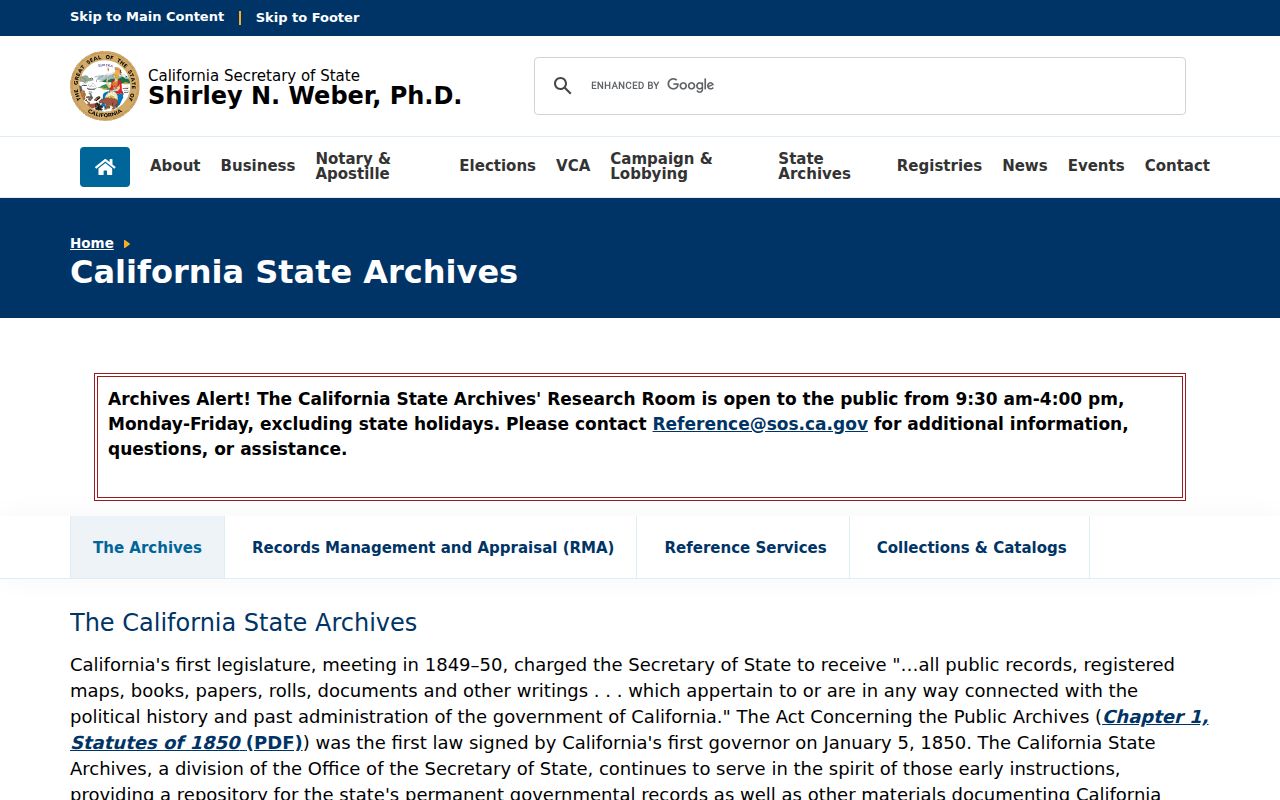
Online catalogs are useful for finding a collection, but a catalog record is not the same as an open scan. Pair the FamilySearch county catalog with the library's databases, the Museum appointment, and the California State Archives. The State Archives holds state and selected county governmental material and provides catalog and research-service routes. The archive image below belongs to that catalog and research context.
Use the State Archives as a companion when a question reaches beyond the Museum's county shelf, especially for government history, custody, or a record series that points to Sacramento.
The record-keeping timeline places each city directory clue in context:
| 1850-1851 | San Joaquin County forms and recorded-document holdings begin. |
|---|---|
| 1852-1980 | County city and county directory coverage is held in local collections. |
| 1860-1990 | Museum maps and aerials preserve the pre-master-plan landscape. |
| 1990s | Mountain House planning and land assembly establish the modern community context. |
| 2000s onward | Subdivision deeds, permits, and parcel records carry more weight than old city directories. |
| July 1, 2024 | City incorporation creates a newer municipal custody layer beside county records. |
The result is a usable but honest city directory trail: county volumes for earlier names, local archives for rural context, and parcel records for the community that followed. Keep the source, date, and geographic label with every conclusion.